
Affiliate disclosure: NorthScout may earn a commission if you book through links in this guide, at no additional cost to you.
Renting an RV can be a smart way to test the lifestyle, take a family road trip or camp comfortably without buying and storing a trailer. The nightly price is only the beginning, though. Mileage, fuel, campsite dimensions, insurance, deposits and cleaning rules can turn an apparently cheap rental into an expensive lesson.
This guide explains what Canadian renters should compare before booking and how to choose an RV that fits the trip—not merely the driveway photo.
Start with the trip, not the RV
Work backward from where you plan to camp. Confirm the campsite’s maximum RV length, electrical service, water and sewer availability before choosing a unit. Parks Canada campgrounds vary considerably: some sites accept larger motorhomes, while others limit RVs to roughly 8 metres or require every vehicle and tent to fit completely on the prepared pad.
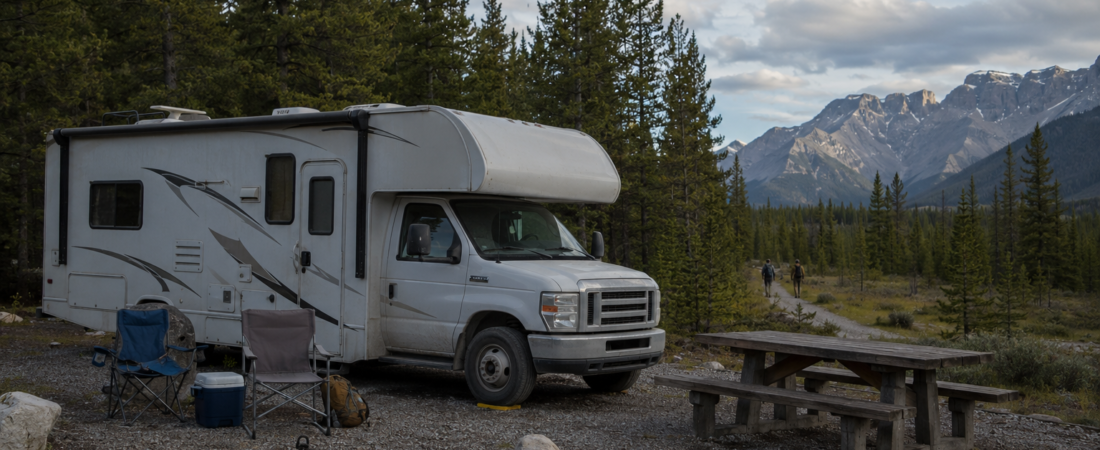
Also consider the roads between home and camp. A large Class A motorhome may look luxurious but can be awkward in older campgrounds, mountain parking areas and small-town fuel stations. A compact Class B campervan is easier to drive but may be cramped for a family. A Class C often offers a useful compromise. A travel trailer can provide more campsite space, but only if your tow vehicle, hitch, payload and experience are suitable.
Compare the total booking price
Never compare rentals using the nightly rate alone. Enter the real dates, destination and expected distance, then review the complete checkout total before committing.
| Cost | What to check |
|---|---|
| Base rental | Nightly rate, minimum stay and any weekly discount |
| Service and protection fees | Amounts shown during checkout and what each protection option covers |
| Mileage | Distance included per day and the overage rate |
| Generator use | Hours included and the charge for extra use |
| Delivery | Flat fee, distance charge and whether setup and pickup are included |
| Cleaning and dumping | Required condition on return and possible additional charges |
| Security deposit | Amount, authorization timing and release process |
| Fuel and propane | Required return levels and estimated consumption |
| Campsites | Nightly camping fees, reservation charges and hookups |
Outdoorsy notes that many rentals include a base allowance for mileage and generator hours, with charges applied beyond those limits. Host-set charges can also include preparation, delivery, cleaning and tank dumping. The only useful price is the full-trip number.
Understand protection before you drive
Do not assume your personal automobile policy or credit card automatically covers a rented motorhome or trailer. Some Canadian credit-card rental certificates explicitly exclude campers, trailers and recreational vehicles, while other issuers direct cardholders to the certificate for vehicle-type exclusions. Check the exact certificate for your card before declining the rental platform’s protection. Read the protection package offered with the booking, including deductibles, exclusions, roadside assistance and what happens after damage. Ask your own insurer whether any coverage extends to the specific type and value of RV you plan to rent.
Does credit-card rental insurance cover a campervan or RV in Canada?
Sometimes people assume that paying with a premium credit card automatically replaces the rental company’s protection. That can be a costly assumption with RVs. For example, one Scotiabank rental-car certificate specifically lists campers, trailers and recreational vehicles among vehicle types not covered. TD likewise tells cardholders to review their own certificate for rental exclusions. Treat credit-card coverage as something to verify for the exact vehicle and card—not something to assume from the words “rental car insurance.”
Useful references: TD credit-card travel benefits and Scotiabank rental-car insurance certificate.
Confirm who is authorized to drive, whether every driver must be listed and whether travel into another province or the United States is permitted. If the trip crosses a border, verify the current documentation and coverage with the rental platform and host before departure.
Motorhome, trailer or delivered rental?
Motorhome
A motorhome keeps the living space and vehicle together. It can simplify one-way sightseeing during the day, but every grocery run or trailhead visit means moving the entire camp unless you bring another vehicle.
Towable trailer
A trailer leaves your tow vehicle available after setup. The trade-off is towing responsibility. Verify rated towing capacity, payload, hitch class, brake controller requirements and loaded—not empty—trailer weight. If any of those terms are unfamiliar, a rental vacation is not the ideal time to discover them at highway speed.
Delivered and stationary rental
Delivery can be the easiest first experience. The host brings the RV to the campsite and may set up levelling, hookups and awnings. This avoids towing and can work well for families attending a festival, reunion or campground weekend. Confirm that the campground accepts third-party delivery and that pickup timing matches checkout rules.
Questions worth asking the host
- What is included for mileage and generator use?
- What must be cleaned, emptied or refilled before return?
- How tall, long and wide is the RV, including mirrors and rooftop equipment?
- Which hookups and electrical adapters are supplied?
- Are bedding, cookware, camp chairs and a basic tool kit included?
- Are pets permitted, and is there a separate fee?
- What is the procedure for a mechanical problem after hours?
- Where can the RV be parked or driven, and are gravel roads restricted?
- How long is the pickup orientation?
- Will the host demonstrate the awning, slides, furnace, water heater, tanks and electrical system?
Do a proper handover
Allow more time than you think you need. Photograph all sides, the roofline where visible, interior surfaces and the fuel, propane, mileage and tank readings. Record existing damage in the platform’s handover process. Ask the host to demonstrate every system you will use and save the support contact information before leaving.
Before pulling away, check tire condition, mirrors, lights, steps, doors, compartment latches, awning and slide position. Secure loose items inside. Know the vehicle height and write it somewhere visible to the driver.
Plan the campsite around the rental
Reserve a site that fits the exact length and service needs of the chosen RV. A 30-amp electrical site does not magically become 50-amp because the children are charging six devices and someone wants to run the microwave, air conditioner and hair dryer simultaneously.
For a smoother trip, build the rest of the setup around the destination. NorthScout’s guides can help you choose a sleep system for Canadian weather, compare camping water-treatment methods, plan camp meals and decide whether a portable power station is useful for unserviced sites.
The practical NorthScout verdict
For a first rental, choose the smallest unit that comfortably handles the people, beds and weather involved. Pay extra for delivery if towing would add stress or risk. Compare the full checkout price, not the headline rate, and treat the handover like a vehicle inspection rather than a ceremonial exchange of keys.
Renting is especially valuable if you are considering buying an RV. One real weekend will teach you more about bed layouts, storage, tank capacity and family patience than an afternoon walking through a dealership.
Affiliate link: NorthScout may earn a commission from a qualifying booking, at no additional cost to you.
Sources: Outdoorsy cancellation and booking charges; Outdoorsy renter guidance; Parks Canada campground information.