
Disclosure: As an Amazon Associate I earn from qualifying purchases. Shopping links may earn NorthScout a commission at no additional cost to you.
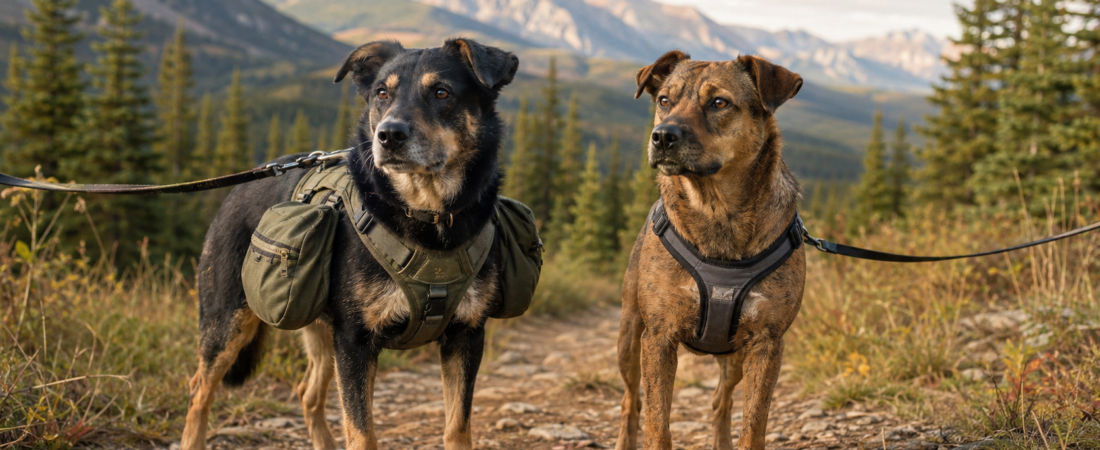
A standard hiking harness controls and secures your dog without asking the dog to carry gear. A backpack harness adds panniers for supplies, but extra weight, heat and movement can create problems if the fit or load is wrong. For most casual walks and short hikes, a well-fitted standard harness is the simpler choice. A pack makes sense for a healthy, conditioned dog on longer outings after veterinary guidance.
Quick comparison
| Standard harness | Backpack harness |
|---|---|
| Lighter and cooler | Carries a small, balanced load |
| Easier to fit and monitor | Needs gradual conditioning |
| Best for daily walks and short hikes | Best for suitable adult dogs on planned trips |
| Human carries food, water and first aid | Dog may carry part of its own lightweight gear |
When a standard harness is better
Choose a standard harness for puppies, senior dogs, dogs new to hiking, hot weather, short outings, or any dog with a health or mobility concern. It should allow normal shoulder movement and breathing while resisting escape. A front attachment can help with training, but it is not a substitute for leash skills.
Look for smooth seams, adjustable straps, visible or reflective details and a strong leash attachment. Check the skin under the straps during rest stops, especially behind the front legs.
When a backpack harness can work
A pack can hold collapsible bowls, waste bags, a light layer or a portion of the dog’s food and water. It should sit securely without twisting or bouncing. The two sides must be balanced; weigh them rather than guessing.
BC SPCA advises consulting a veterinarian before fitting a backpack, introducing it gradually, and keeping the pack at no more than 10 percent of the dog’s body weight. That is a maximum, not a target. Terrain, temperature, age, fitness and the individual dog may call for much less—or no pack at all.
Fit checklist
- You can fit about two fingers under the straps without looseness that permits escape.
- Straps do not cross or restrict the shoulder blades.
- Buckles do not sit on the spine, elbow or other pressure point.
- Panniers clear the front legs and remain level on both sides.
- The dog can walk, lie down, turn and drink normally.
- There is no redness, hair breakage, chafing or change in gait.
Introduce a pack slowly
- Let the dog wear the empty pack at home for a few minutes.
- Practice on short, familiar walks.
- Add a very small, soft, balanced load.
- Increase distance before increasing weight.
- Stop if the dog lags, resists, pants unusually, moves stiffly or develops rubbing.
Trail safety matters more than storage
Carry more water than you expect to need and offer it regularly. Keep your dog leashed where required, bring identification, monitor paws, and know the rules for the trail. In cold weather, the AVMA recommends recognizing each pet’s tolerance because cold risks vary with coat, health and activity.
The human should carry the first-aid kit, emergency insulation and anything heavy. Review our dog hiking gear checklist and dog first-aid kit guide before longer trips.
Bottom line
Use a standard harness when security and comfort are the main jobs. Consider a backpack harness only when a veterinarian agrees, the dog is physically ready, the fit is excellent and the load stays light and balanced.