Disclosure: As an Amazon Associate I earn from qualifying purchases. Shopping links may earn NorthScout a commission at no additional cost to you.
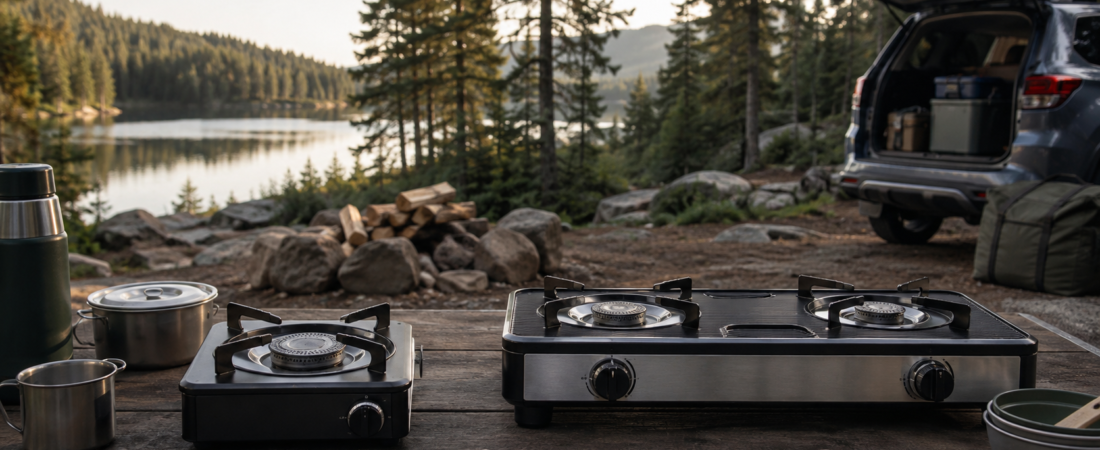
A single-burner stove is lighter and easier to pack. A double-burner stove cooks a family meal without forcing the pasta and sauce to take turns. The better choice depends less on burner count than on group size, vehicle access, wind, cookware and the meals you actually plan to make.
Quick decision
| Choose single burner when | Choose double burner when |
|---|---|
| You hike, paddle or have limited storage | You camp from a vehicle or RV |
| Meals use one pot or boiling water | You cook separate components together |
| One or two people share the stove | A family or larger group needs faster service |
Single-burner advantages
Compact burners suit simple menus: boiling water, heating soup, cooking oatmeal or using one-pot recipes. They require less table space and can be easier to shelter with a manufacturer-approved windscreen. Backpacking models may mount directly to a fuel canister, while larger tabletop models provide a broader base.
Stability matters. Compare the stove’s support diameter with your cookware and follow its stated pot-size limit. A huge frying pan balanced on a tiny burner is less a cooking system and more a suspense series.
Double-burner advantages
Two burners let you boil and fry at the same time, keep one pot warm, or prepare food for several people without long delays. Tabletop camp stoves also tend to provide a wider platform for family cookware. The penalties are extra weight, storage volume and fuel use when both burners run.
Check whether the advertised total output is divided between burners. Controls should allow useful simmering as well as full heat; maximum BTUs alone do not describe cooking quality.
Questions to ask before buying
- How many people will it regularly feed?
- Are most meals one-pot, dehydrated or multi-pan?
- Will the stove be carried or transported by vehicle?
- What fuel is available near the destination?
- Does the stove fit your cookware and camp table?
- Can it be cleaned without dismantling half the kitchen?
Fuel and cold-weather planning
Propane, butane and blended canisters behave differently as temperatures fall. Use only the fuel and regulator specified by the manufacturer. Keep connectors clean, inspect seals and carry enough fuel for planned cooking plus a reasonable delay.
Never improvise adapters or heat a fuel cylinder. Store and transport fuel according to the label and local rules.
Carbon-monoxide and fire safety
Health Canada warns that portable butane stoves should never be used indoors or in confined spaces. Fuel-burning camping equipment can produce carbon monoxide, an odourless and colourless gas. Do not operate a camping stove inside a tent, camper, garage, shed or other enclosed or poorly ventilated space.
Cook outdoors on a stable, non-combustible surface away from tent fabric, dry vegetation and air intakes. Follow current campground fire restrictions; a stove may be treated differently from an open fire, but local rules control.
Bottom line
Choose a single burner for light packing, one-pot meals and one or two campers. Choose a double burner for vehicle camping, family meals and simultaneous cooking. The right stove matches your menu and cookware while remaining stable, serviceable and safe.
Shop camping stoves
Confirm fuel compatibility, operating instructions and current fire restrictions before use.